
In short
- An underactive thyroid means the thyroid gland in your neck does not make enough hormones, so many of the body’s functions slow down.
- Symptoms such as tiredness, feeling cold, weight gain, constipation and low mood usually come on slowly and can be mild.
- It is diagnosed with blood tests for thyroid-stimulating hormone (TSH) and thyroxine (T4).
- Treatment is usually a daily tablet that replaces the missing hormone, with regular blood tests to get the dose right.
- Chest pain, or a swollen neck that makes it hard to breathe, needs 998.
Tests you can book
- Lab tests60% off
Advanced Thyroid Care
Advanced Thyroid Care is an in-depth hormonal assessment designed to provide a complete and clinically detailed evaluation of thyroid gland function, autoimmune involvement and metabolic impact. A DHA-licensed nurse collects your blood sample at your home, off
AED 292.95
View detailsUsual price AED 733.95 - Lab tests50% off
Thyroid Profile
The Thyroid Profile is a comprehensive blood test that evaluates thyroid gland function, focusing on key hormones that regulate metabolism, energy levels, weight, mood, heart rate and overall endocrine balance. A DHA-licensed nurse collects your blood sample a
AED 124.95
View detailsUsual price AED 250.95
What the thyroid does
The thyroid is a small, butterfly-shaped gland at the front of your neck. Its hormones control how your body uses energy, and they affect your breathing, heart rate, weight, digestion and mood. When it does not make enough, many of those functions slow down. An underactive thyroid is common, and it can be managed with treatment.
Symptoms
- Feeling extremely tired.
- Feeling cold more than usual.
- Putting on weight, or a puffy face.
- Constipation.
- Difficulty concentrating, low mood or depression.
- Dry skin, dry or thinning hair, or hair loss.
- A croaky (hoarse) voice, and joint or muscle pain.
- Irregular or heavy periods, or problems getting pregnant.
- A swollen neck from an enlarged thyroid (goitre).
Because the condition develops slowly, many people do not notice symptoms for months or even years. Many of these symptoms have other causes too, which is why a blood test matters more than a checklist.
Causes and who is more likely to get it
The most common cause is Hashimoto’s disease, an autoimmune condition in which the immune system attacks the thyroid. It is most common in women and usually starts between the ages of 30 and 50, but anyone can get an underactive thyroid. Other causes include:
- Inflammation of the thyroid (thyroiditis) or another thyroid condition.
- Surgery or radiotherapy to the neck or thyroid, or treatment for an overactive thyroid.
- Some medicines.
- Too little iodine in the diet, or in rare cases too much.
- Being born with it (congenital hypothyroidism).
You are more likely to have it if others in your family have had a thyroid condition. MedlinePlus also lists other conditions linked to a higher risk, including rheumatoid arthritis, Sjögren’s disease, pernicious anaemia and Turner syndrome.
How it is diagnosed
A doctor will ask about your symptoms, whether anyone in your family has had a thyroid or autoimmune condition, and whether you have been pregnant recently. They may feel your neck to see if the thyroid is swollen.
The key tests are blood tests for TSH and T4. Some people also have T3 and thyroid antibody tests, and occasionally an ultrasound or thyroid scan. The doctor may refer you to a specialist. Our guide to common blood tests explains what a thyroid panel looks at.
How it is usually treated
Treatment replaces the hormone your thyroid cannot make, usually with a tablet taken every day. Most people need it for the rest of their life to stop the symptoms coming back, and should be able to live a normal life.
Getting the dose right takes a few steps. MedlinePlus describes a blood test about 6 to 8 weeks after starting, another after each change of dose, then one at 6 months and yearly after that. Being on the wrong dose can cause side effects such as feeling sick, diarrhoea, headaches or trouble sleeping, so tell your doctor or pharmacist if you notice them. Never stop the medicine without talking to your doctor. If you have an autoimmune thyroid condition, ask which foods, supplements and medicines containing iodine to avoid.
Complications to know about
An underactive thyroid is not usually serious when it is treated properly. Left untreated, or on the wrong dose, it raises the risk of:
- Heart problems, including coronary heart disease and heart failure.
- Bone problems, including osteoporosis.
- High cholesterol. See our page on high cholesterol.
- In very rare cases, myxoedema coma, a life-threatening emergency that needs hospital treatment and is more common in older people.
Pregnancy. Tell your doctor if you are pregnant or planning a pregnancy. You will need more tests, and your dose is likely to change. Untreated, an underactive thyroid raises the chance of pre-eclampsia, premature birth and miscarriage, and can slow the baby’s growth. Treatment usually helps prevent these problems.
When to see a doctor, and when to call 998
Call 998 or go to the nearest emergency department for chest pain that feels tight or squeezing or spreads to your arms, neck or jaw, or for severe difficulty breathing. A swollen thyroid can sometimes cause trouble breathing or swallowing: get emergency help if breathing becomes hard. Myxoedema coma is rare but is an emergency.
Book an appointment if you think you might have an underactive thyroid, if your symptoms have changed while you are on treatment, or if you are planning a pregnancy. General practitioners and internal medicine doctors on medicAI work at independent facilities licensed by DHA or DoH, and can review your thyroid results with you by video and decide what comes next.
Doctors you can book for underactive thyroid
 Dr Anju Begum, General Practitioner, uniCare Medical CenterGeneral Practitioner · 10 years · Hindi, Urdu, English
 Dr. Leena KapoorGeneral Practitioner · 28 years · AED 25 · Hindi, Urdu, English
 Dr. Tarun ShuklaGeneral Practitioner · 35 years
 Dr. Dany RajakumarGeneral Practitioner · 5 years
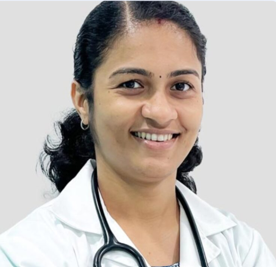 Dr. Shilpa Surian, General Practitioner, WeCARE Medical Center LLCGeneral Practitioner · 3 years · AED 45 · English, Malayalam
 Dr. Ekramulla Mohamed Ali, General Practitioner, Wecare Medical CenterGeneral Practitioner
Doctors are independent. A listing is not a recommendation. Before you book, you can check a doctor's licence in the health authority's public register. See all doctors.
Questions people ask
What blood test checks for an underactive thyroid?
The main tests measure thyroid-stimulating hormone (TSH) and thyroxine (T4). A doctor may also check T3 and thyroid antibodies.
Is an underactive thyroid serious?
It is not usually serious if you are on the right treatment. Untreated, it can raise the risk of heart and bone problems, and very rarely it leads to a life-threatening emergency called myxoedema coma.
Will I need to take thyroid medicine for life?
Most people do, to stop the symptoms coming back. You will have regular blood tests to check the dose is right.
Can an underactive thyroid cause weight gain?
Yes, putting on weight is one of the common symptoms. Weight gain has many other causes, so a blood test is needed to know whether the thyroid is involved.
Can an underactive thyroid affect pregnancy?
It can cause fertility problems, and if untreated it raises the chance of complications such as pre-eclampsia and miscarriage. Tell your doctor when you are planning a pregnancy, because your dose is likely to change and treatment usually helps prevent these problems.
Sources and further reading
- Underactive thyroid (hypothyroidism) (NHS)
- Hypothyroidism (MedlinePlus)
- Heart attack (NHS)
Read next
medicAI is not for emergencies. If someone is seriously ill or injured, call 998 or go to the nearest hospital.
This page is general information. It does not replace advice from a doctor who knows your situation. medicAI is a technology platform. Care is given by independent licensed facilities, who are responsible for it and for its outcome.